


Works by Thomas Mailaender.


Leiter on publicity:
“I spent a great deal of my life being ignored. I was always very happy that way. Being ignored is a great privilege. That is how I think I learnt to see what others do not see and to react to situations differently. I simply looked at the world, not really prepared for anything.”
Leiter on turning down Edward Steichen's invitation to participate in the now-famous Family of Man exhibition: "It seemed to me that that exhibition was less about photography, and more about things that I wasn't sure of."
[source: Lens Culture]

Dec 15, 2010:
In an astonishing move, the European Commission (EC) has reversed a decision made in a UK tax tribunal, and refused to classify works by Dan Flavin and Bill Viola as “art”. This means that UK galleries and auction houses will have to pay full VAT (value added tax, which goes up to 20% next year) and customs dues on video and light works, when they are imported from outside the EU. The decision is binding on all member states.
The new classification goes against a victory won in a UK tribunal in 2008 (The Art Newspaper, February 2009, p47). A legal battle began after the Haunch of Venison gallery imported six disassembled video installations by Viola into the UK from the US in 2006, and sought to import a light sculpture by Flavin. Declared as “sculpture”, they would only have been liable for 5% VAT.
But customs rejected this, and charged Haunch of Venison £36,000 duty. In 2008 Haunch appealed, and won: the VAT and Duties Tribunal ruled that such works were indeed “art” and only liable to 5% VAT.
Now the EC has overturned this decision. In its ruling a Flavin work is described as having “the characteristics of lighting fittings…and is therefore to be classified…as wall lighting fittings”. As for Viola, the video-sound installation, says the document, cannot be classified as a sculpture “as it is not the installation that constitutes a ‘work of art’ but the result of the operations (the light effect) carried out by it”.
[via The Art Newspaper]
Oy vey. See also: slippery slope.

"The museum has become a quasi-sacred space, with rules as complicated and inviolate as any church liturgy. People who don't find the meaning of their existence in churches are often passionate about museums, where a set of fundamental values - openness, fearlessness, truthfulness - are celebrated with all the historical trappings."


Encountering the “take away” artwork, consisting of unlimited or large-run editions whose individual pieces are free for the taking, has become a common occurrence in contemporary art exhibitions. A strategy notably employed in Félix González-Torres’ “stack” works, the take away has been used by many other artists with a variety of intents and forms. The spirit of generosity, an exploration of dispersion and the attempt to circumvent the art market are just a few of the potential motivations cited for generating take away works.
Twice Removed aims to provide a venue where the multiplicity of meanings and post-exhibition life implied by the take away model can be considered by exhibiting single units of these works together.
The project will take form as an exhibition, website and pamphlet to be published by Golden Age at the conclusion of the show.


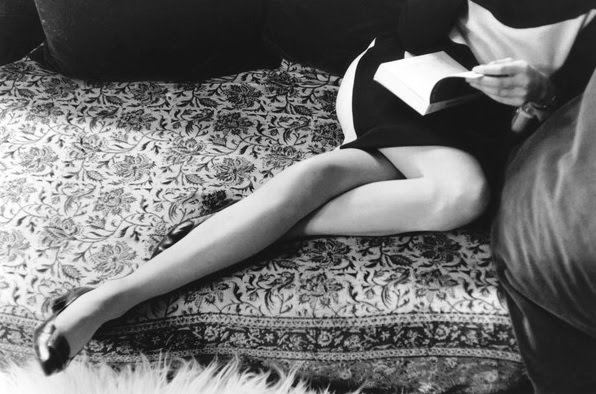 Martine's Legs, 1968
 Brie, France, 1968
 Brussels, Belgium, 1932
 Santa Clara, Mexico, 1934


